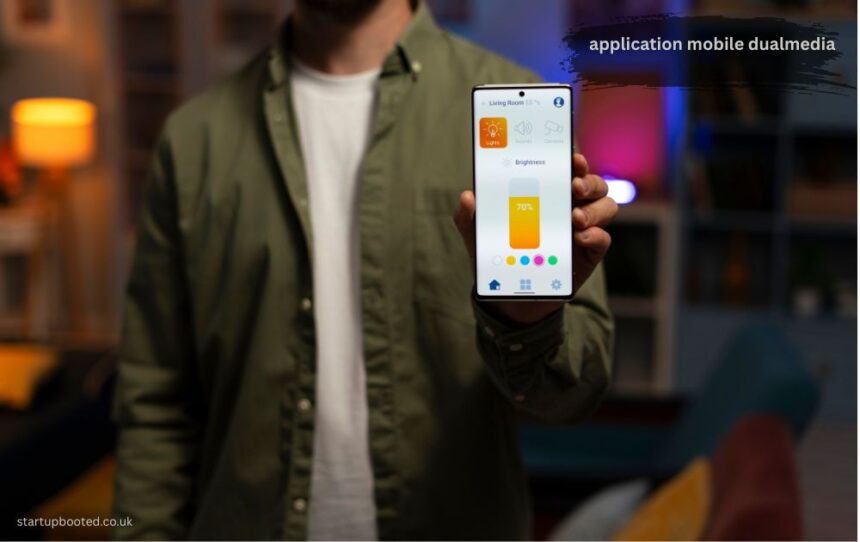
The term application mobile dualmedia is becoming increasingly relevant as mobile users expect richer and more interactive digital experiences. It generally describes mobile applications that combine different media formats, such as video, audio, images, text, and interactive elements, within one platform. In some contexts, DualMedia can also refer to a Paris based mobile development agency that creates custom applications for businesses. This guide explains the concept, features, benefits, uses, development process, and important considerations in simple terms.
What Is Application Mobile DualMedia?
An application mobile dualmedia is generally a mobile application designed to combine two or more forms of digital media in one user experience. Instead of requiring people to move between separate platforms for video, audio, written information, or interactive content, the application can bring these elements together. For example, an educational app may combine video lessons with written notes and quizzes, while a media platform could combine audio, video, images, and articles.
Understanding the DualMedia Concept
DualMedia should not always be understood as the name of one specific consumer application. Online references use the term in different ways, including multimedia mobile applications and services associated with DualMedia, a Paris based digital agency. This distinction is important because someone searching for an application mobile dualmedia may actually be looking for a multimedia app concept, a development company, or information about a particular service.
Key Features of Application Mobile DualMedia
Modern dual-media applications can include several features that make digital content easier to access and interact with.
- Multi-format content: Supports combinations of video, audio, images, text, and interactive elements.
- Mobile-friendly design: Interfaces are designed around touchscreens and smaller displays.
- Cloud synchronization: Content can be stored and updated through connected online systems.
- Personalized content: Recommendations can help users discover information that matches their interests.
- Push notifications: Apps can alert users about new content, updates, or important activity.
- Analytics: Developers and businesses can monitor engagement and content performance.
How Application Mobile DualMedia Works
A dual media application normally combines a mobile interface with backend services, media-processing systems, databases, and cloud infrastructure. When users open the app, the interface communicates with these systems to retrieve content and deliver it in a suitable format. Video and audio may require streaming technology, while text, images, accounts, and interactive features can be managed through APIs and databases. Good architecture is important because several types of content must work smoothly without creating unnecessary delays.
Benefits of Application Mobile DualMedia
Combining different media types can provide practical advantages for users and organizations.
- Better engagement: Video, audio, images, and interactive content can make experiences more engaging.
- Greater convenience: Users can access several types of information from one application.
- Improved learning: Educational platforms can combine explanations, demonstrations, notes, and activities.
- Stronger communication: Businesses can use multimedia to communicate information more effectively.
- Flexible content delivery: Users can consume information through formats that suit their preferences.
Application Mobile DualMedia for Businesses
Businesses can use dual-media applications to create more useful digital experiences for customers and employees. An online retailer might combine product photographs, demonstration videos, descriptions, and customer reviews, while a company could use video training alongside documents and interactive assessments. News organizations, entertainment companies, educational providers, and service businesses can similarly use multimedia applications to deliver information in a more engaging way.
Common Use Cases
The flexibility of the application mobile dualmedia concept makes it suitable for several industries and digital services.
- Education: Video lessons, audio explanations, digital notes, and quizzes can work together.
- E-commerce: Product pages can combine descriptions, images, demonstrations, and customer content.
- Business training: Employees can receive multimedia courses, documents, and assessments.
- Social platforms: Text conversations can be combined with images, videos, audio, and live features.
- Content creation: Creators can organize and distribute different forms of digital content from one platform.
User Experience and Mobile Design
A successful dual-media application needs more than multiple content formats; it also needs a clear and simple interface. Users should be able to find important functions without navigating through confusing menus. Responsive layouts, readable text, accessible controls, fast loading, and intuitive navigation can make the experience smoother. Developers should also consider different screen sizes and operating systems so that the application remains consistent across supported devices.
Security and Privacy Considerations
Security becomes especially important when an application stores user accounts, personal information, media files, payment details, or business data. Developers should use secure authentication, appropriate permissions, encrypted communication, regular software updates, and reliable data-storage practices. Users should also review application permissions and avoid downloading unofficial versions from unknown websites. A trustworthy distribution channel and transparent privacy policy are important indicators when evaluating any mobile application.
How to Develop an Application Mobile DualMedia
Developing this type of application requires planning before technical development begins. A typical process starts by identifying the target audience and deciding which media formats are actually necessary. Designers then create the user interface and user journey, while developers build the frontend, backend, media functionality, and APIs. Testing should cover performance, compatibility, security, accessibility, and different network conditions before launch. Ongoing maintenance is also necessary because operating systems, devices, security requirements, and user expectations continue to change.
Technology behind DualMedia Applications
The technical stack depends on the application’s size and purpose, but multimedia apps commonly require mobile development frameworks, backend services, databases, cloud storage, media-processing tools, APIs, and content delivery systems. Native technologies such as Swift for ions’ and Katlin for Android can provide platform specific experiences, while cross platform frameworks can help teams share development resources. Adaptive streaming and cloud infrastructure can also help deliver media efficiently to users with different devices and connection speeds.
Application Mobile DualMedia and Performance
Performance is one of the biggest challenges for multimedia applications because videos, audio files, images, and interactive elements can consume significant storage, bandwidth, and processing power. Developers can improve performance by compressing media appropriately, using caching, optimizing images, reducing unnecessary background processes, and delivering content according to the user’s connection. Fast startup times and smooth playback are particularly important because users may abandon an application when content takes too long to load.
Is Application Mobile DualMedia Worth Using?
Whether an application mobile dualmedia approach is worthwhile depends on the user’s needs. For people who consume or manage multiple forms of content, combining media into one platform can be convenient and engaging. For businesses, it can create opportunities to provide richer customer experiences and organize different services within one application. However, adding features simply for the sake of having more functionality can make an app complicated, so every media feature should have a clear purpose.
What to Check before Using a DualMedia App
Before installing or relying on any application associated with the DualMedia name, users should verify exactly what they are downloading or accessing.
- Check the developer: Confirm who created and maintains the application.
- Use official stores: Prefer recognized app distribution platforms.
- Review permissions: Avoid apps requesting unnecessary access to personal information.
- Read privacy information: Understand how personal data and content are handled.
- Verify the purpose: Make sure the application actually provides the features you need.
Future of Application Mobile DualMedia
The future of multimedia mobile applications is likely to focus on personalization, artificial intelligence, real time interaction, cloud services, and increasingly seamless content delivery. Users are already accustomed to switching between video, audio, text, and interactive experiences, so future applications may combine these formats even more naturally. AI-powered recommendations, automated content organization, real-time features, and personalized interfaces could make dual media platforms more useful while reducing the effort required to find relevant content.
Conclusion
The application mobile dualmedia concept reflects the growing demand for mobile experiences that bring different types of digital content together. It can combine video, audio, text, images, and interactive functions in a single environment, making applications useful for education, entertainment, business, news, and content creation. However, the term can have different meanings online, so users should identify the exact service or technology they are researching. With thoughtful design, strong security, and good performance, multimedia applications can provide a convenient and engaging mobile experience.
FAQs about application mobile dualmedia
FAQs about application mobile dualmedia
What is application mobile dualmedia? A mobile app that combines video, audio, text, images, and interactive content.
Is DualMedia one specific mobile app? Not necessarily; the term can describe multimedia apps or a mobile development agency.
What can dualmedia applications be used for? They are useful for education, entertainment, e-commerce, news, training, and business.
Are dualmedia applications available on Android and iOS? Yes, many can be developed for both Android and iOS platforms.
Are dualmedia applications safe? Safety depends on the specific app, developer, permissions, and download source.
Why are multimedia apps becoming popular? They provide different content formats in one convenient and engaging platform.